What Happens When You Restructure a Superpower Power Around a Narcissist Who Doesn’t Understand Global Power Relationships?
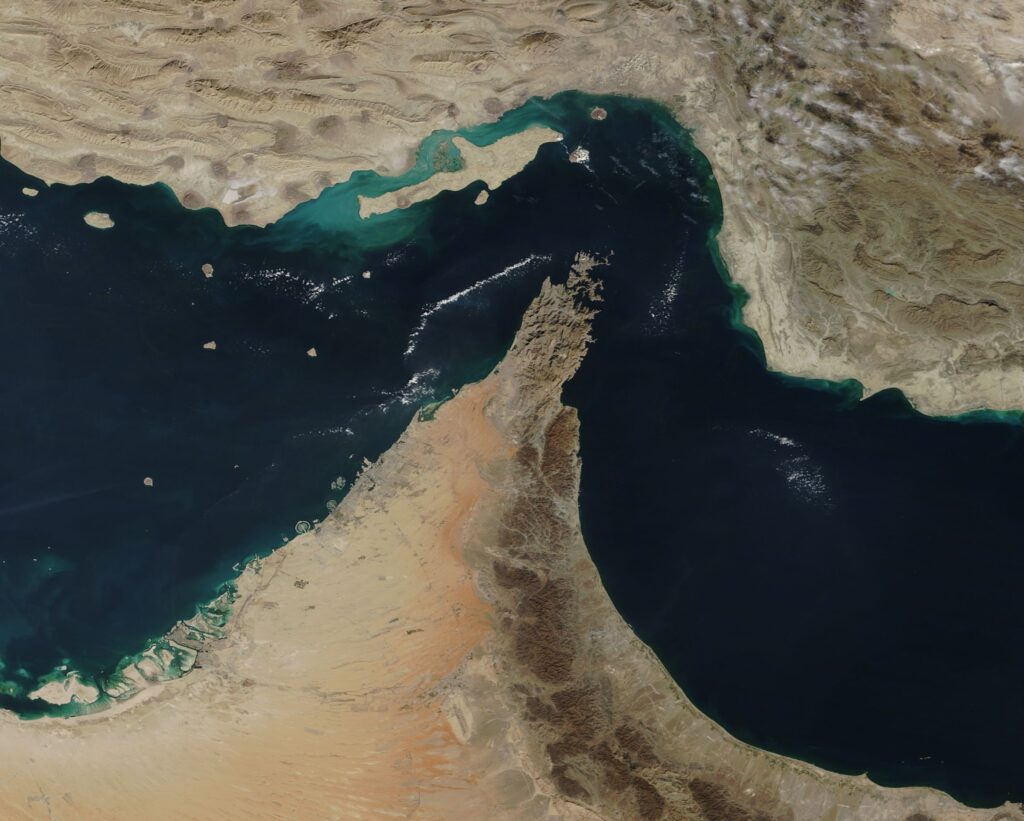
The Strait of Hormuz by MODIS Land Rapid Response Team, NASA GSFC – This image or video was catalogued by Goddard Space Flight Center of the United States National Aeronautics and Space Administration (NASA) under Photo ID: 2018-12-10., Public Domain, https://commons.wikimedia.org/w/index.php?curid=145434088
Alan Lester
When he reacted to Trump’s threat to annihilate Iran’s ‘cvilisation’ Pope Leo XIV put his finger on Trump’s greatest weakness on foreign policy. With his narcissistic ‘delusion of omnipotence’, he simply doesn’t understand how Great Powers maintain hegemony. The USA’s greatest problem on the global stage right now is the absolute concentration of policy decision-making in his irresponsible hands and the replacement of anyone around him with strategic nous by ignorant sycophants. With his ‘Secretary of War’ and wannabe Crusader Pete Hegseth, he thinks the projection of global power is all a matter of brute force. Alliances, diplomacy and soft power are all unnecessary, liberal and woke. While he burns through long-standing alliances with tariffs and threats of invasion Trump delegates diplomacy to his son-in-law and a real estate investor. Soft power is a sideshow that involves compromise, and he’s an uncompromising kinda guy.
Their delusion about the nature of power is why he and his immediate advisors are so disappointed in Britain. When they speak of ‘restoring Europe’s civilizational self-confidence and Western identity’, they mean restoring the kind of power that they imagine Britain used to wield around the world. The new National Security Strategy declares a sentimental attachment to Britain and Ireland and a desire ‘to restore their former greatness’. Hegseth mocked the ‘big, bad Royal Navy’ to highlight its decline since the nineteenth century, when he and Trump believe, Britain was Great because it too had omnipotent power.
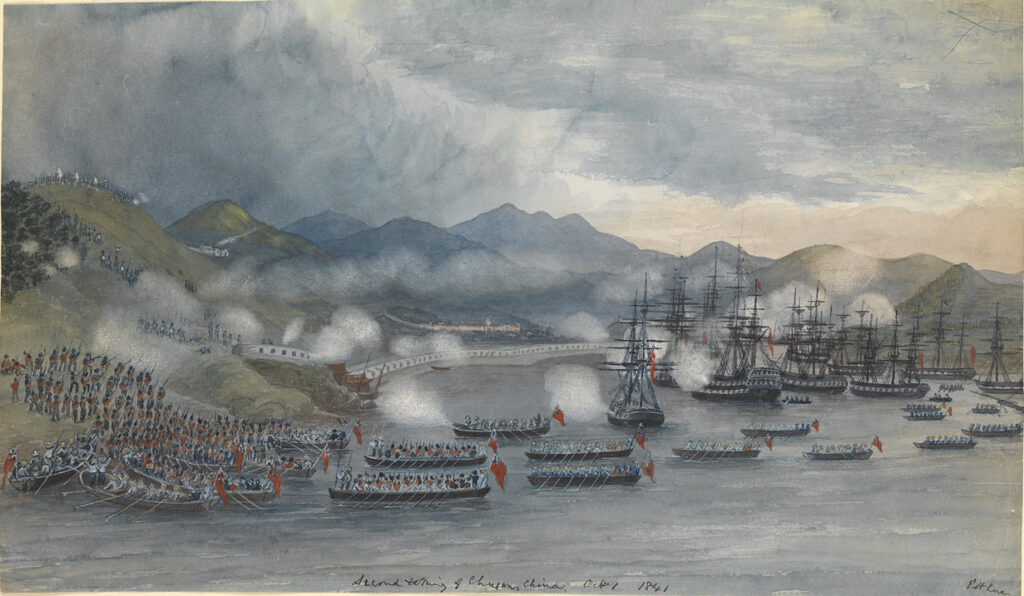
The Capture of Chusan During the First Opium War on 1 October 1841, by Edward H. Cree – http://collections.rmg.co.uk/collections/objects/100859.html, Public Domain, https://commons.wikimedia.org/w/index.php?curid=9729181
It didn’t. Britain could project the force required to seize resource-rich territory, maintain a geostrategic advantage over rivals and satisfy its investors’ greed in certain places and times, but never everywhere and all at once. There are lessons that the USA could learn from the British Empire’s administration, but it would take a different president with a different circle of advisors to acknowledge them.
Governors like George Grey, once the darling of the Colonial Office for his self-described ‘humane’ subjugation of Australian Aboriginal people, Māori and Black South Africans, were peremptorily recalled if they over-committed the military, as Grey did in both New Zealand and the Cape Colony. The War Office, Colonial Office and Admiralty kept a close eye on the distribution of soldiers and ships, well aware that they could fight only so many fires at once, even with the assistance of an Indian army that was at least as large as the British army. The greatest crisis of empire came in 1857 when many of those Indian soldiers mutinied, largely because of the East India Company’s diminishing respect for them.
Britain was able to block advances from Russia towards its Indian Empire only by supporting the ‘sick man of Europe’, the Muslim Ottoman Empire, as a bulwark. When intervention was required to prop it up, Britain negotiated an alliance with France before taking on Russia in the Crimean War. It was fortunate for Britain that it succeeded. It was able to suppress the Indian Uprising the following year only because the Sultan in Constantinople agreed that British troops could transit the Isthmus of Suez to reach India by the fastest route, bizarrely pretending to be parties of moustachioed tourists.
Lord Palmerston was celebrated for his ability to maintain a system of European alliances that maintained a rough balance of power and kept Britian out of continental land wars that would soon have absorbed its relatively small territorial military capacity. Instead that limited capacity was projected, with the assistance of the Royal Navy, around the empire beyond Europe, where the troops had a clear technological advantage over adversaries.
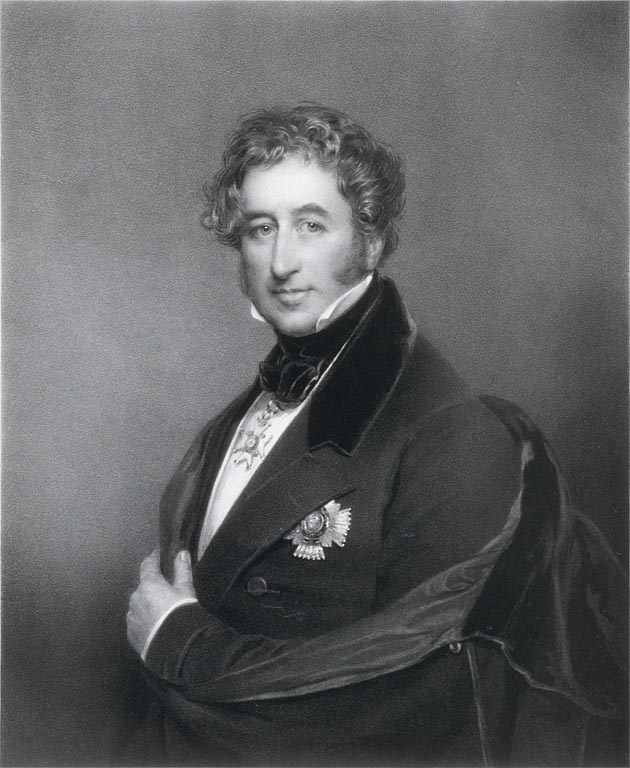
3rd Viscount Palmerston, Carl Wildt, Public domain, via Wikimedia Commons
At the Brussels conference in 1890 Britain and the other the European powers adopted Germany’s suggestion that arms sales to Africans should be banned. This was the first, distinctly racist, international agreement on arms control. Firearms with modern technology, mainly breech-loading guns and semi-automatic pistols, were reserved for the white elite, African recruits for colonial regiments and colonial police forces. The rest of the African population could access only outdated weapons, mainly smooth-bore muzzle-loading guns. When British forces used Maxim guns in Rhodesia and Sudan, their adversaries did not stand a chance.
It was the careful management of wars of aggression and conquest, along with smaller ‘punitive expeditions’, backed up by agreements with other powers, both allies and competitors, that enabled territory to be seized, resistance to be crushed and the nominally ‘free’ market to be skewed in British capitalists’ interests, sometimes down the barrel of a gun. Although Britain launched some 65 wars in the second half of the nineteenth century alone, much of the fighting was carried out by Indian troops whom the British were more careful to conciliate after 1857.
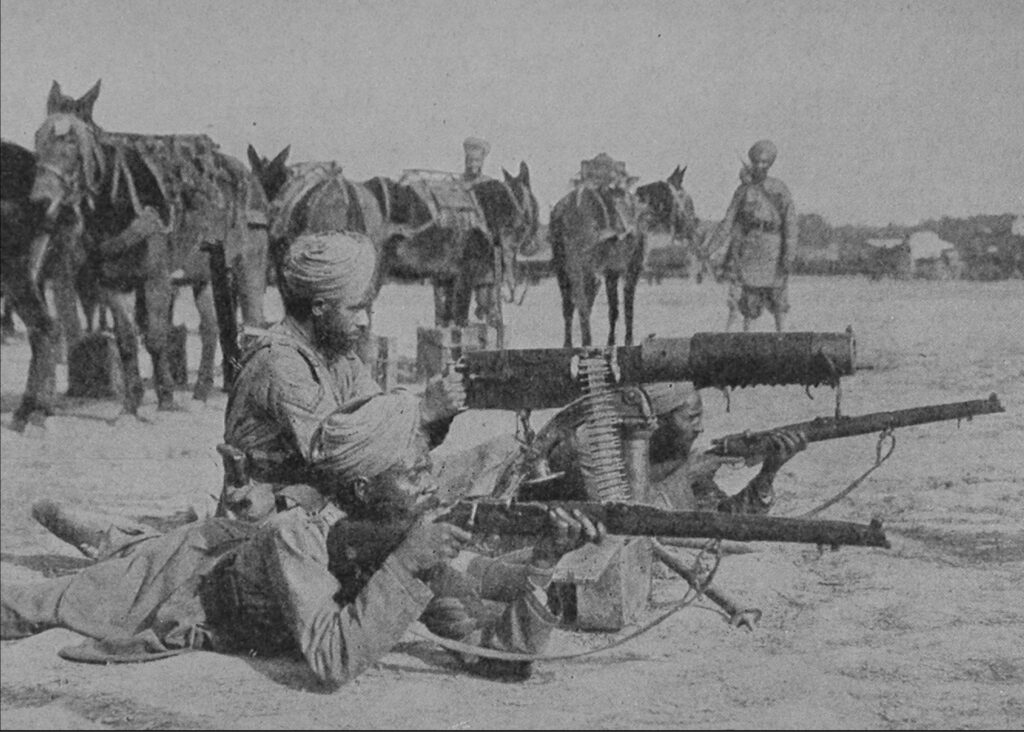
Photo From World War One Photos Archive. www.WW1Photos.com
Larger British commitments in the nineteenth century, like the humiliation of China in the Second Opium War, were undertaken only with European and, tacitly, American allies on board. While events like the Suez Crisis or the handover of Hong Kong to China are often seen as they key milestones in Britain’s imperial retreat, a more significant moment was Britain’s loss of access to the Indian army after India’s and Pakistan’s independence in 1947. That meant that Britain’s late colonial wars in Kenya, Malaya, Suez and Aden had to be fought with British and colonial troops and local allies alone – one of the key reasons for post-WWII conscription and so many British men still being under arms into the 1960s.
Trump seems to ‘get’ only one of the strategies employed by imperial Britain. When he kidnapped Nicolás Maduro, he was aping a strategy that Britain put to good effect in West Africa. There, British palm oil traders successfully lobbied for the removal of Jaja of Opobo, who monopolised production in a core region and would not relinquish the commodity on terms the British were willing to tolerate. In 1887 he was invited aboard a British vessel for negotiations, abducted and deported to Barbados. Could this be why Iran’s foreign minister, Abbas Araghchi politely declined Steve Witkoff and Jared Kushner’s invitation to visit to the USS Abraham Lincoln carrier strike group just before Trump launched his current war?
The same Lord Palmerton who so carefully avoided British commitments in Europe declared that force ‘may be exercised upon shore as well as at sea, and irrespectively of the consent of the native government’, if it was justified as part of the effort to put down slavery. In quick succession a series of African rulers besides Jaja were deposed so that Britons could gain control of the lucrative palm oil industry, using antislavery as their pretext. British Prime Minister Lord Russell admitted that he was ‘content to wink at any violation of Vattel’ (referring to the scholar of international law), enabling the deposition of King Kosoko in Lagos, so that Liverpool-based traders could control ‘an important outlet for the commerce of a large Range of Country in the Interior’. Venezuela and its oil are now under Trump’s indirect rule, much like swathes of West and East Africa and India lay under British rule, with the pretext of combatting ‘narco-terrorism’ substituting for the suppression of slavery. In the Trump administration’s National Security Strategy, published last November, what the British called indirect rule comes under the heading ‘Enlist and Expand’. Venezuela has been ‘enlisted’.
Although the National Security Strategy has been rightly criticised for its racist obsession with white Christian nationalism, it does at least contain strategic intent. Palmerston’s ‘balance of power’ within Europe is reflected in Trump’s cosying up to Putin, and the idea of concentrating the USA’s influence in the Western hemisphere, with the ‘Trump corollary to the Monroe Doctrine’ echoes Britain’s reluctance to commit resources outside its empire. However, the Strategy dismisses the need for ‘a massive military, diplomatic, intelligence, and foreign aid complex’, regarding America’s soft power as something that exists independently of such apparatus, something inherited and timeless, that can be taken for granted. It is actively hostile to international institutions and frameworks of agreement as forms of ‘transnationalism that explicitly’ seek ‘to dissolve individual state sovereignty’.
The Strategy’s notion of diplomacy is centred wholly on Trump’s own charismatic interventions. As American ambassadors are presented with the headache of explaining his constant insults to their hosts, Trump delegates sensitive negotiations to sycophants with zero expertise. Steve Witkof has referred to the strait of Hormuz as the ‘Gulf of Hormuz’ and admitted that his knowledge of Iran’s nuclear programme was sketchy even as he entered upon negotiations to replace the deal that Obama’s administration had negotiated and Trump scrapped. When talks resumed after the first Israeli-US attacks, Witkoff arrived in Muscat with Admiral Brad Cooper, the commander of US forces in the Middle East in full naval uniform, saying that he ‘just happened to be in the neighbourhood.’ Surprised by this clear breach of diplomatic protocol, the Omani hosts had to ask Cooper to leave. Breaking off negotiations to resume warfare at a moment’s notice hardly builds the trust needed for diplomats to work effectively.
In his decision to launch the war on Iran, Trump has ignored other key elements of his own Security Strategy. ‘Stopping regional conflicts before they spiral into global wars that drag down whole continents is worthy of the Commander-in-Chief’s attention, and a priority for this administration’, it states. It continues: ‘The days in which the Middle East dominated American foreign policy in both long-term planning and day-to-day execution are thankfully over—not because the Middle East no longer matters, but because it is no longer the constant irritant, and potential source of imminent catastrophe, that it once was. It is rather emerging as a place of partnership, friendship, and investment—a trend that should be welcomed and encouraged’. Finally, the Strategy promises that ‘America will always have core interests in ensuring that … the Strait of Hormuz remain open … We can and must address this threat … without decades of fruitless “nation-building” wars’.
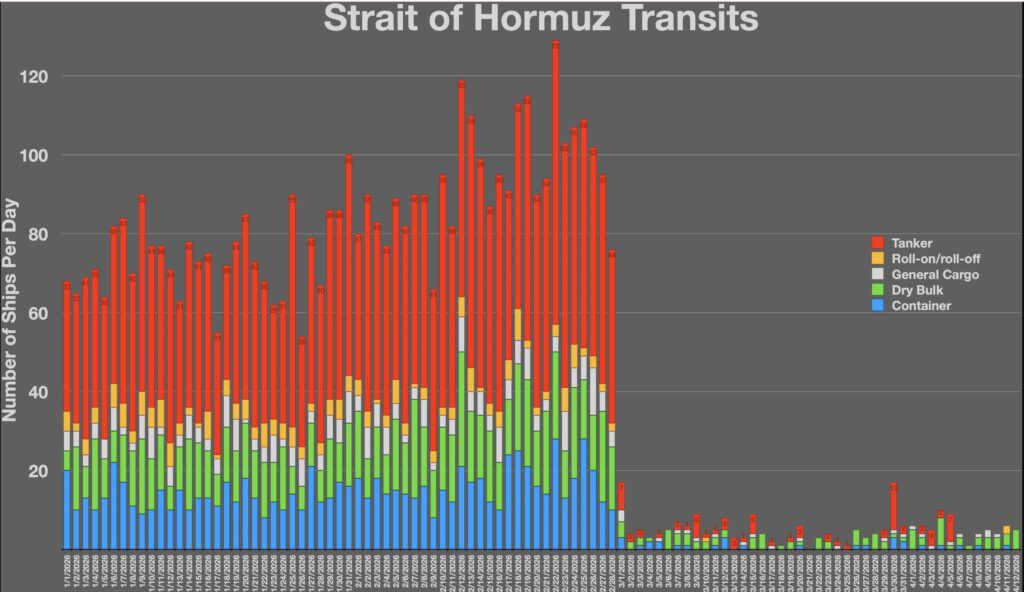
Strait of Hormus Transits to 14 March 2026: https://en.wikipedia.org/wiki/2026_Iran_war
It seems that the fickle and hubristic president was drawn into his war because he ignored a further piece of strategic guidance: ending the ‘lobbying and influence operations that seek to steer our policies or involve us in foreign conflicts’. Benjamin Netanyahu got around that prohibition masterfully. All the evidence suggests that the only element of his own expressed strategy document to which Trump pays any attention is that promising to make America ‘strong and respected again’ by fielding ‘the world’s most powerful, lethal, and technologically advanced military’ and using the US economy’s leverage against friend and foe alike.
The question is, will Trump’s Iran escapade, launched without allies, launched indeed after a year of insults, tariffs and threats against America’s longest standing and staunchest allies, teach him any lessons about the other strategies that Britain used to maintain the world’s largest and most diverse empire?

John Fullerton
Unfortunately for us all, especially Iranians, Lebanese, Palestinians and Venezuelans, Trump will not read this, nor will he take the message on board. An history lesson, thank you.