Remarks on the Preconditions
Alan Lester
These notes were the basis of a ten minute talk delivered at the Africa Centre, London as part of a panel in commemoration of the 140th anniversary of the end of the Berlin Conference of 1885.[i]
I will aim to complement Dele’s [the previous speaker’s] focus on the discussion and outcomes of the conference itself by discussing its pre-history: the events and ideas that allowed European leaders to conceive it as both possible and legitimate to decide among themselves the fate of another continent while its inhabitants looked on from the sidelines. Such events and ideas seem very topical at a time when the US and Russian states are negotiating the fate of Ukraine and the US state is planning the ethnic cleansing of Palestinians from Gaza with the Israeli state.
In many ways the conference, requested by King Leopold of Belgium and convened by Chancellor Bismark of Germany in Berlin in 1884-5, was the culmination, rather than the beginning, of a process. It set the rules going forward for a European scramble to obtain African territory and resources that had been underway for some time. Most of the boundaries between colonies, later nation states, that the powers in Berlin ratified had been agreed in bilateral discussions between the interested parties beforehand, including the Congo concession that Leopold had in mind when requesting the conference.
As an historian of the British Empire I will focus mainly on the part played by Britain, the dominant colonial power, in setting the scene for the discussions in Berlin – discussions that British imperial administrators eyed warily, with relatively little to gain compared to states like Belgium and Germany, and much more, potentially, to lose.
Prior Encroachments
British incursions into sub-Sharan Africa had begun in the wake of Portuguese and Spanish quests, initially for the fabled gold of Mali, but ultimately for a far more lucrative ‘commodity’ – enslaved people to traffic to sugar plantations in the Caribbean.
The structural violence that the European demand for captives, as both capital assets and a Caribbean labour force, produced between 1500 and 1800, drove the destruction of some African polities and the formation of new states exploiting the opportunities for economic and military growth that a slave raiding economy promised.
With a population of some 70-80 million across the entire continent in 1600, the extraction of 12.5 million captives for the trans-Atlantic slave trade between 1500 and 1850, and the capture of between 4 and 10 million people for the Arab and Ottoman ‘markets’ over a longer period, had repercussions for all African societies. It meant both that there were more militarised states for Europeans to conquer, and an enormous population of displaced people from fragmented polities, whom Europeans could recruit as shock troops to assist them.
As Britain’s maritime power grew in tandem with the East India Company’s exploitation of new revenues from the conquest of India, so the southern-most point of the African continent became more valuable as a halfway point between the Atlantic and Indian Oceans. With the Cape Colony seized during the Napoleonic wars, British military investment thereafter projected a British presence northwards and eastwards into the hinterland.
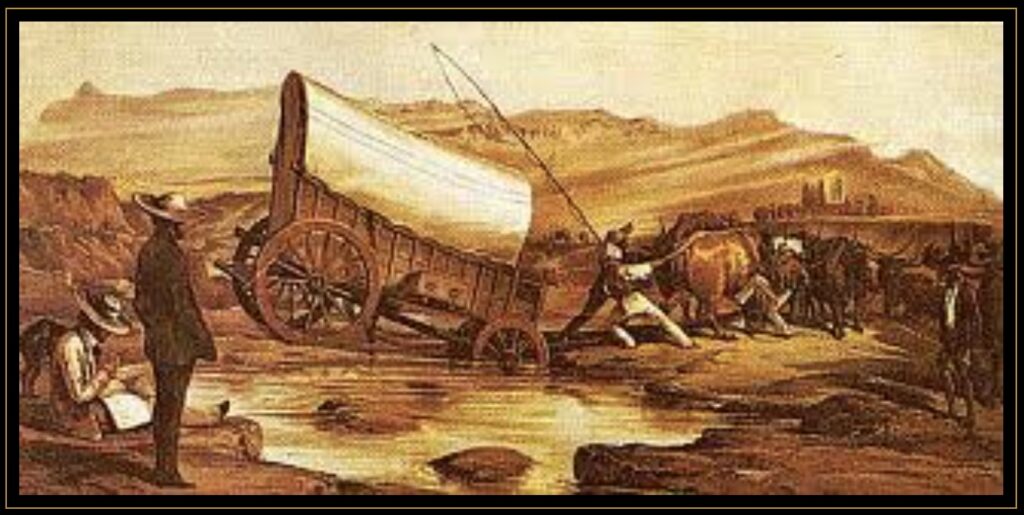
The Xhosa on the colony’s eastern frontier experienced the first wars of dispossession as British settlers joined Dutch-speaking Afrikaners in a sustained encroachment. When Britain abolished slavery in the Caribbean, Cape and Mauritius in 1834, it spurred thousands of Afrikaner ‘voortrekkers’ to move onto and across the Highveld, establishing further zones of European settlement and African displacement.
The Scramble Begins
While the colonisation of much of southern Africa had created a British presence far inland by the 1870s, what really kickstarted the scramble for Africa was the discovery of the world’s largest diamond reserves at what is now Kimberley, on the Cape Colony’s northern edge. First the British government declared the diamondiferous territory British, and then it threw its military resources into a scheme to confederate the colonies, republics and remaining independent African polities in the region, bringing them all under British rule.
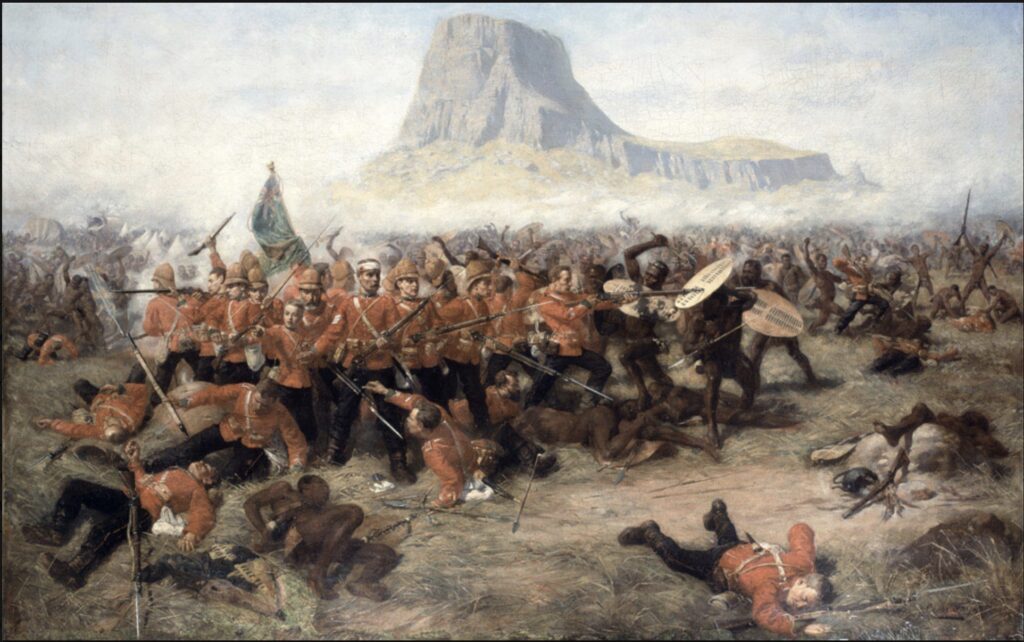
From 1878-1879, a new British High Commissioner launched a series of wars, the scale and significance of which are still under-appreciated. The best known, probably the only known, as far as most Britons are concerned, was the Anglo-Zulu War, immortalised in the film Zulu and marked by the British defeat at Isandlwana. But this came after wars had already been launched against the Griqua, Xhosa and Pedi. Britain’s determination to bring the entire region within its Empire, even at the cost of tens of thousands of Africans killed, sparked the first fears among other rapidly industrialising European powers, particularly Germany, that they were missing out on the continent’s potentially vast mineral and other resources. Informal German support for the Afrikaner (now known as Boer) republics was an early manifestation of their concern to rival British ambition and ruthlessness.
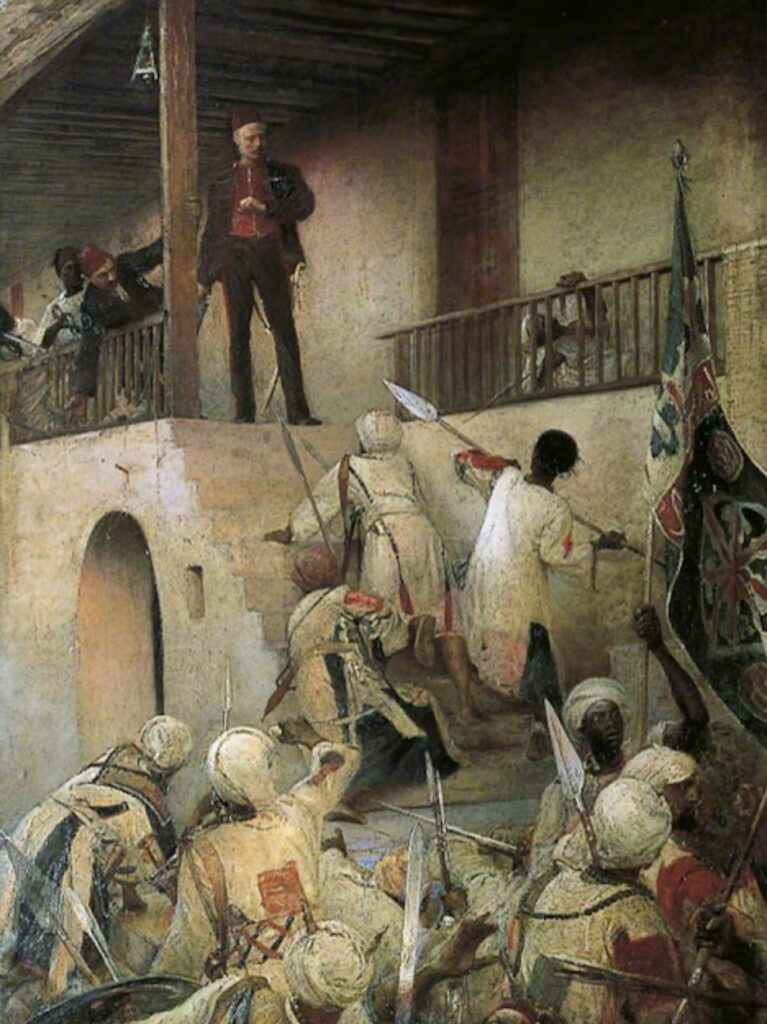
By the 1870s, the strategic importance of the southern tip of the continent was matched if not exceeded by that of its northeastern corner. Much of the traffic between Britain and its most lucrative Indian possessions was now conducted via the Suez Canal, obviating the need for all shipping to circle around half the continent. The imperative of maintaining a degree of control over the canal had led to a British-French condominium effectively reducing the Egyptian Pasha to debt peonage. In 1882, the British intervened militarily to uphold his rule against the proto-nationalist revolt of Ahmed Urabi. A further British military intervention was underway in the immediate lead up to the conference, as the Mahdi threatened proxy Egyptian control of much of the Sudan. The news of General Gordon’s death in besieged Khartoum would reach the British delegates as they returned from Berlin.
Legitimising the Scramble: The Role of Anti-Slavery
Narrating the events precipitating the scramble for Africa is one thing, but it is equally important to explain how European propaganda worked to render Africa a zone ripe for European usurpation and occupation. Perhaps surprisingly to many, that justification had its roots not in the dehumanisation of African people that trans-Atlantic slavery had wrought, but in the antislavery campaigns that succeeded it.
In the aftermath of emancipation in the Caribbean, influential figures like Thomas Carlyle and Charles Dickens portrayed the freedom of Africans as a failed experiment. Those released from planters’ ownership in 1834 had not all stayed on the sugar plantations working diligently for low wages as the evangelical antislavery campaigners had promised. Instead, many of them had abandoned their former owners’ control, heading for less productive land that they could farm and where they could reconstitute families broken apart by the selling of husbands, wives and children to other planters. Rather than seeing this as an indication that family bonds and self-determination were just as important to Black as to White people, many Britons interpreted the abandonment as a refusal to work and to become civilised: an indication of inherent African laziness and barbarism.
In an endeavour to prove these sceptics wrong, the leader of the emancipation campaign in the House of Commons, Thomas Fowell Buxton, led an expedition up the River Niger in the early 1840s. He hoped to demonstrate that Europeans could ‘civilise’ Africa through free trade and exposure to Christian example, without the ‘need’ to conquer or enslave them. The Niger expedition’s failure, when many of the Europeans died of disease, served only to reinforce images of a Dark Continent inhabited by inherently barbarian Black peoples, and of humanitarian reformers as naïve sentimentalists.
That rhetoric of African savagery came to be focused on the fact that slavery was still practised in parts of Africa. Having helped precipitate the militarization of slave raiding African societies, armed with weapons from Europe, Britons were now antislavery evangelicals, seeing in those societies an inherent African savagery, which called for new forms of colonial intervention. A revived antislavery campaign, spearheaded by the heroic missionary explorer David Livingstone, who had witnessed the horrors of Swahili slave raids in eastern and central Africa, demanded the colonisation of more of the continent in order to save Africans from themselves.
For Europeans more interested in the profits that could be made from African resources, antislavery served as a powerful vehicle of public and governmental support. They and their governments set about a propaganda campaign, casting their economic and geopolitical motivations in the guise of humanitarianism. Before the Berlin Conference, antislavery had already justified Britain’s overthrow of West African leaders who insisted on tariffs for palm oil traders, and the conquest of the Sultan of Zanzibar who threatened Britain’s geopolitical interests in the Indian Ocean. When British forces conquered the Asante they justified the expedition on the grounds of antislavery, whilst kidnapping and enslaving African men to work as porters.
Antislavery became the legitimation for the carve up of Africa agreed in Berlin because it was already a tried and tested rationale for British imperial conquest. Each European leader at the conference tried to outdo the others with his appeals to antislavery conviction and his hard-headed humanitarian credentials. Leopold, who went on to oversee the most atrocious regime of enslavement, torture and mass murder of all in the Congo proclaimed loudest of all that his only interest was care for those trapped in the mire of African savagery and slavery. Africans, who knew not how to govern themselves without slavery, were to be passive onlookers, as benevolent Europeans carved up the continent on their behalf.
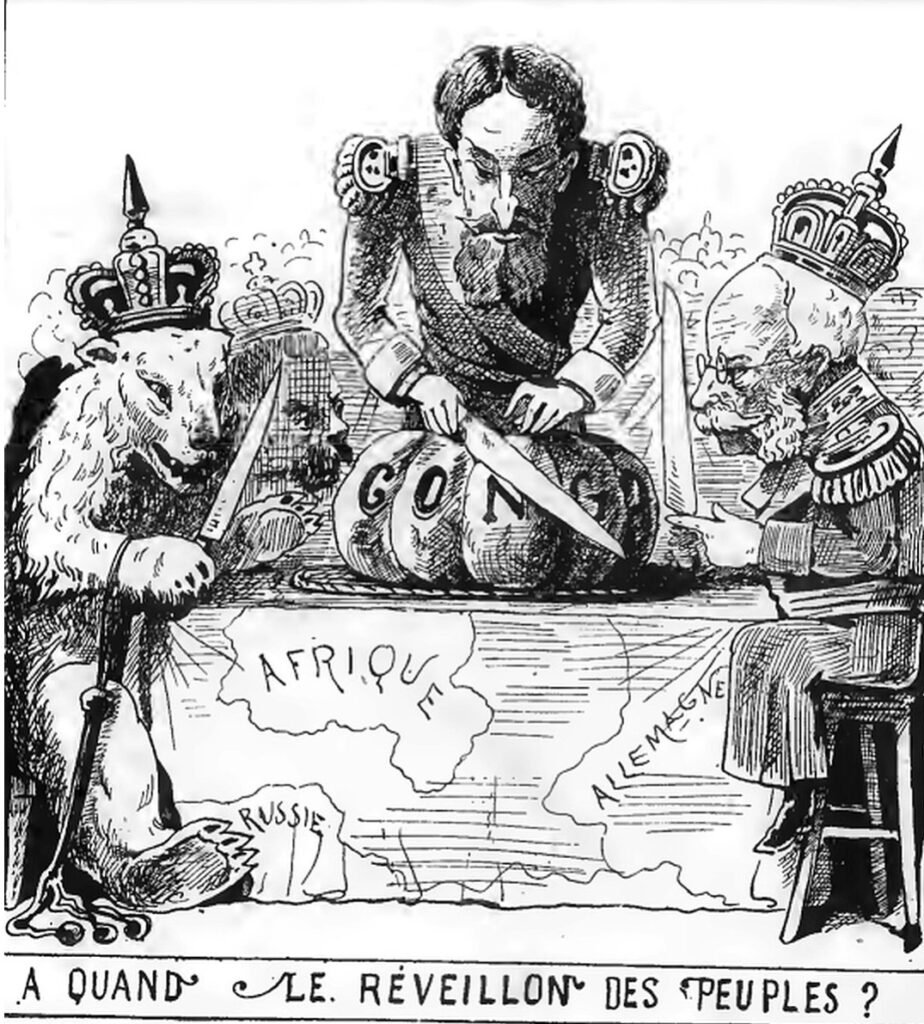
When the conference agreed that all Europeans should have access to trade across all parts of the continent regardless of which power controlled them, the driver was profit. But it was justified by antislavery. When Germany and Britian decided, in advance of the conference, to let Leopold have the Congo, it was to keep France from getting it. But it too was justified by antislavery.
Perhaps the key thing that the European powers in Berlin overlooked was that the moral justifications they provided for their imperial carve up might come back to bite them. The attempt made in Berlin to prevent conflict among themselves by agreeing on rules for the division failed. Indeed, it helped to pave the way for the most destructive conflict yet between them. In the wake of WWI, the European colonial powers were depleted militarily and economically. Anticolonial leaders in Africa emerged and, like those in Asia, they seized upon the hypocrisy of European rule highlighted in Berlin. No matter how hard the British, French and Germans tried to pin the blame entirely on Leopold’s ‘excesses’, there was no avoiding the fact that the humanitarian intentions expressed by all the European powers had been followed by naked exploitation.
The moral bankruptcy of European colonial rule was a key factor in anticolonial activism’s growing momentum among a new class of African elites from the 1890s onwards. These had been educated as part of a gamut of developmental initiatives that were too little, too late to salvage legitimacy. With a more powerful post- WWII USA backing their calls, these anticolonial movements would see to the independence of the states imposed on them within a few decades.
The conference in Berlin, then, was three things at once: the culmination of a far longer process of sub-Saharan African destabilisation and usurpation spearheaded by the British; a failed attempt to prevent inter-European rivalry from spilling over into warfare; and a moment in which the fundamental hypocrisy of Europe’s civilising colonial mission was laid bare.
[i] My thanks to co-panelist Matthew Sterling Benson, who alerted me to a source that I have incorporated subsequently.

Inko-Tariah Grandson
It is worth noting that the overwhelming majority of pre-colonial indigenous African ethnic nations did not have words for ‘slave’ or ‘slavery’ in their ethnic languages. The very existence of over 2100 ethnic nationalities in Africa today is a testament to the ancient civilization, contentment & tolerance of Africans.
dapo ladimeji
This is amazing! This is appaling linquistics. Look at ancient egypt b’k for prisoner of war or labourer. 3,000 BC. Are you not living in cloud cuckoo land? Much of Africa spoke/read Arabic after 1100. University of Timbuctu founded before Oxford and Cambridge. Kindly wake up.