University of Exeter Debating Society 22nd Nov 2025
Argument for the Proposition
Alan Lester
The modern European empires were many things, but above all they were vehicles for the transfer of assets and wealth from peoples of colour around the world to white European people. When those empires ended, formal sovereignty was conceded but as Olúfémi Táíwò puts it, they ‘had already built the pipes through which advantages and disadvantages flow’.
Put simply my argument is this: colonialism was more extractive than developmental and post-colonialism has failed to reverse the flow. Empire lives on, not in terms of sovereignty but in the payment of interest on debts, capital flight and drain of wealth from former colonies in the Global South to former imperial heartlands in the Global North. Furthermore, because the inequalities of Empire were racial as well as geographical, it lives on as racialised disparities both between and within countries.
Colonial Extraction:
Richard Temple told the Royal Statistical Society in 1884 that of the £203 million at the disposal of the British state for general government, £89 million came from the UK (including Ireland), £74 million from India, and £40 million from territories and colonies in the rest of empire. That is, over half the money at the disposal of the British government came from its colonies.[1]
In 1895, Colonial Secretary Joseph Chamberlain told the House of Commons that ‘Cases have already come to my knowledge of colonies which have been British … for more than 100 years, in which up to the present time British rule has done absolutely nothing’ to assist in their development.
Within most colonies, the tax regimes imposed by white- dominated legislatures were regressive, serving to shield the wealth accumulated by white individuals, and businesses and impose the main tax burden on colonised subjects. When the first Colonial Development and Welfare Acts were passed in response to waves of strikes and riots in the Caribbean and West Africa in 1929, they consisted of loans which these taxpayers had to pay back to the British Treasury and private bank creditors with interest rates of around 6 per cent.
Post-Independence Development:
The pipelines of extraction that Empire built now take 3 main forms:
- Debt: the countries of the Global South, nearly all former colonies, have made approximately $4.2 trillion in interest payments to private creditors in London and New York alone since 1980. Debt repayments for former colonies account for 45% of government revenues on average and as much as 70% in the lowest-income countries. They are spending three times as much on servicing their debts as they are on education, and more than four times as much as on health.
- Capital flight since independence: In 1964, UNCTAD calculated that the inflow of capital from former colonial powers to former colonies for development was ‘offset throughout the postwar years by a steady outflow of short-term funds.’ What had happened was the flight of white-owned capital, as colonial elites converted assets into liquid capital and withdrew it to flourishing tax havens like Panama, Bermuda and the Caymen Islands, before newly independent governments could tax it.
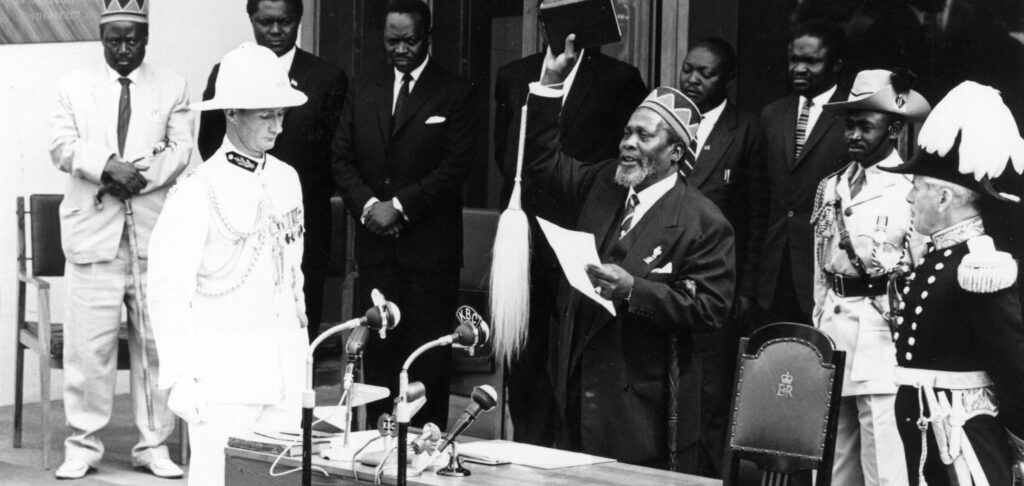
It was little comfort for Kenyans, for example, to be told by the Colonial Office in 1962, that, as independence approached, Britain would underwrite World Bank loans at 5.75 % interest to buy back the land from which they had been driven, because the white settlers to whom it had been given were now willing to sell it again.
- Capital drain: Since 2010, the African continent is losing $97 billion annually through unrecorded capital outflows, mainly due to oil and mineral mis-invoicing by major transnational companies that took shape in the colonial period. These corporations exploit the opacity of global financial systems, including offshore centres.[2] The cumulative amount of their extraction has been vastly larger than capital inflows, which are mainly remittances from migrants overseas.
In addition, 97% of the world’s patents are held in the former imperial heartlands; they control the World Bank, IMF and WTO that condition the relationships between Global North and South, and Global South wages are 1/5 the level of those in the North, meaning that for every unit of embodied labour former colonies import from former metropoles, they have to export many more units to pay for it. Economists estimate that the total drain from Global South to North amounts of $62 trillion since 1960. For every dollar the South receives from the North in aid, it loses $14.[3] Despite the UN’s acceptance of former colonies’ proposals for a New International Economic Order in the 1970s, former imperial heartlands were able to block its fairer trade technology transfer, and development assistance initiatives.[4]
Along with the broad developmental divide between former colonies and imperial heartlands though, we must consider the afterlife of Empire’s racial hierarchies. These are reflected not only between regions such as the Caribbean and Europe, but also within the former imperial heartlands. ONS figures show significant disparities in pay, employment, education, housing, and the criminal justice system by ethnicity within the UK. Nearly half of people from the Pakistani group, and 31% of Black British people live in households that were in the bottom fifth of incomes, compared to 18% of White people. Only 4% of those from the Pakistani group and 10% from the Black group live in households that are in the top fifth of incomes, compared to 21% of White people.
Not only does economic extraction still flow from the Global South to the Global North then, but the modern European Empires’ racial hierarchies, fine-tuned over 400 years, have been imported to the Global North too, in the wake of decolonisation.
[1] https://archive.discoversociety.org/2020/07/01/focus-accounting-for-british-history/
[2] Léonce Ndikumana and James K. Boyce, ‘New estimates of Capital Flight From African
Countries, 1970 – 2022’, Political Economy Research Institute (PERI) University of Massachusetts Amherst, Jan 2025: https://peri.umass.edu/wp-content/uploads/2025/02/CapitalFlight_1-15-25.pdf
[3] Hickel, J., Sullivan, D., & Zoomkawala, H. (2021). Plunder in the Post-Colonial Era: Quantifying Drain from the Global South Through Unequal Exchange, 1960–2018. New Political Economy, 26(6), 1030–1047. https://doi.org/10.1080/13563467.2021.1899153
[4] Mabefam, M., & Yajalin, J. E. (2025). New International Economic Order at 50: a reflection on the vision through Samir Amin’s lens. Development in Practice, 35(6), 902–916. https://doi.org/10.1080/09614524.2025.2467992
