Alan Lester
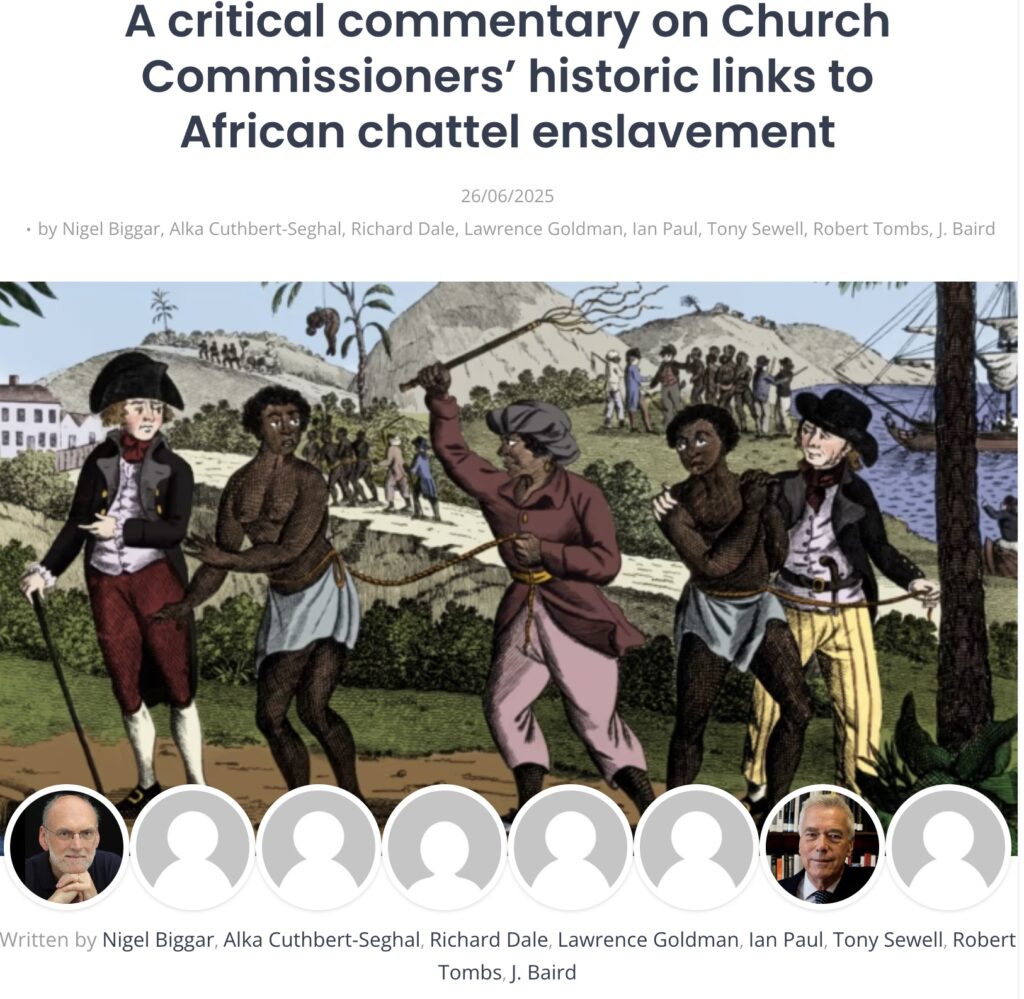
There are two issues at stake. First and most immediate, Project Spire, the £100m (over nine years) reparative investment fund, set up in recognition of the links that the Church of England maintained with slavery.
Secondly the broader question of slavery’s role in Britain’s Industrial Revolution. The conservative campaigning group History Reclaimed objects to Project Spire and to suggestions that slavery was economically important for Britain. It is seeking historical evidence to validate these positions.
Let’s take Project Spire first. It was launched because the Church found that its clergy support fund, Queen Anne’s Bounty, was a shareholder in the South Sea Company. This trafficked enslaved Africans to Spanish colonies.
History Reclaimed are arguing that most of the fund was invested in annuities, paid through government debt interest, rather than shares in the slave-trading branch of the South Sea Company. Furthermore, that the slave trading branch was, overall, unprofitable. This is true. However, it is a weak argument against Project Spire.
This is because the Church did still own shares in the slave-trading branch, while it trafficked some 20,000 captives, 3,000 of whom died on the horrendous Middle Passage from Africa to the Americas. For the Church this is what counts, not the degree of profit made from the investment.
History Reclaimed’s clamour about annuities is a deflection from something they’ve previously acknowledged: that ‘The Bounty managers seem to have acquiesced in this traffic’. Project Spire was established in recognition of this.
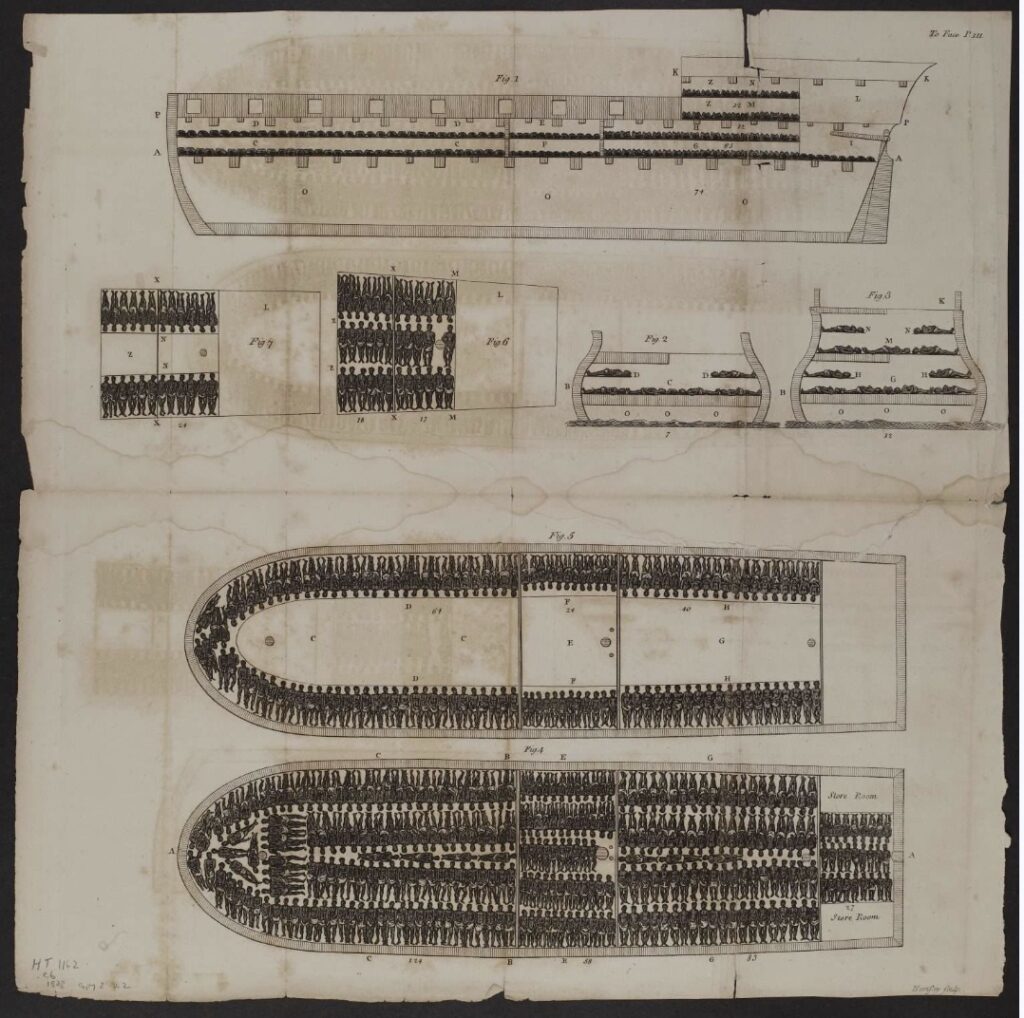
Now the second issue: History Reclaimed also want to undermine recent historical research indicating that slavery played a more important role in British economic growth than was previously recognised.
They believe that this recent research is merely a post-Black Lives Matter revival of the Black historian Eric Williams’ work from the 1940s. Not being specialists, however, they have failed to see that the two main aspects of his work have long been revised & updated.
Broadly, his first claim, that slavery helped to fuel the Industrial Revolution has been substantiated but also qualified. His second, that abolition took place only because slavery was becoming less profitable, is more contested, since it was still profitable in places. Uninterested in the nuance of these debates among specialists, History Reclaimed have conducted a smash & grab raid into the historiography in search of any statements they can extract to suggest that slavery had no role in industrial growth.
Their latest gambit is to use a new book by the leading specialist on the slave trade, David Eltis. Eltis believes that some historians, in particular Maxine Berg and Pat Hudson, have exaggerated the role played by slavery in kickstarting the Industrial Revolution in Britain. See the appendix below if you are interested in what I make of this claim.
For now, what matters is this: we can think of Britain’s Industrial Revolution as the first cake of its kind, baked with special ingredients combined in a particular sequence. Slavery was one of these ingredients, but it interacted with others specific to Britain at the time.
That’s why the Industrial Revolution took place in Britain first, despite other European countries, notably Portugal (upon which Eltis focuses) having practised slavery for longer. Think of slavery being (appropriately) the sugar needed for the cake. British coal was the flour and financial and government institutions the eggs and the oven. What specialists argue over is how much sugar went into the cake and when. Was sugar a vital ingredient, needed to catalyse the chain reaction that made the cake, or was it merely an optional extra?
History Reclaimed are rampaging through these debates like a bull in a china shop looking for a way to take out the sugar entirely and still end up with the same cake. Eltis offers their best hope because he’s right at the minimalist end of the ‘sugar’ debate (see appendix). Even he doesn’t believe the cake would have been the same without any sugar though. A different cake may have emerged, but not the one that actually was Britain’s Industrial Revolution. Like it or not, slavery was an ingredient irrespective of debates over its relative contribution.
So there it is: History Reclaimed are determined to bring down Project Spire and refute historians’ interpretations of slavery in British history but they lack the historical grounding or evidence to do either.
Appendix: Eltis v Berg and Hudson
Before I come to what Eltis says about Maxine Berg and Pat Hudson’s Slavery, Capitalism and the Industrial Revolution, it’s important to note that History Reclaimed have already misused Eltis’ previous book, Economic Growth and the Ending of the Transatlantic Slave Trade (1987). They cite it as supporting their own claim that ‘The nineteenth-century costs of suppression [of the slave trade] were certainly bigger than the eighteenth-century benefits.’ However, this is not at all what Eltis wrote. He actually claimed that,
‘In absolute terms, the British spent almost as much attempting to suppress the trade between 1816 and 1862 as they received in profits over the same length of time leading up to 1807.’
Even if we leave side the significant ‘In absolute terms’, which means that in real terms the cost of suppression were even less than the profits of slave trading, there are two further problems with History Reclaimed’s interpretation of these words. First, ‘almost as much’ should certainly not have been translated into ‘certainly bigger’. Secondly, they have taken Eltis’s specific comparison of the 46 years pre- and post- abolition to denote the whole of the eighteenth century relative to the whole of the nineteenth century. The profits from a century in which Britain dominated the slave trade were in fact immeasurably higher than the costs of suppression (which, by the way, History Reclaimed also go on to exaggerate substantially).
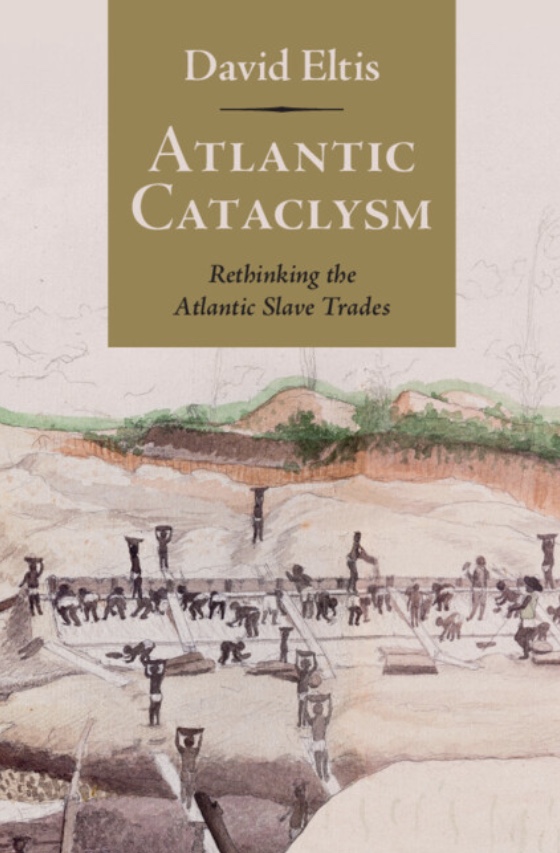
Eltis’ latest book, Atlantic Cataclysm, is a sweeping history of slave trading across the Atlantic, which centres Iberian trafficking to the Americas rather than British slave trading. As all historians of slavery acknowledge, Spanish and especially Portuguese slave trading lasted longer, and took a greater proportion of captives overall, than the British ‘trade’, which was more concentrated in the eighteenth century.
However, Elits throws in a very brief critique of Berg and Hudson’s recent synthesis of slavery’s contribution to Britain’s Industrial Revolution. History Reclaimed are delighted by it , claiming that ‘Our case has been supported very recently’ by this ‘authoritative new work’.
Eltis is the leading historian of the European trans-Atlantic slave trade, and he is clearly exercised about what he perceives as a tendency to exaggerate its role in the Industrial Revolution. He is not an expert on the Industrial Revolution. Berg and Hudson have a long and illustrious record as historians of the Industrial Revolution, but had not, until relatively recently researched trans-Atlantic slavery. Having long studied industrialization from a more British-centric perspective, they have developed a new appreciation of slavery’s significance for their topic, and sought to elucidate it. Eltis’ critique of them seems to me to be based on the misunderstanding that they now see no role for anything other than slavery.
Eltis writes, ‘The latest attempt to defend the primacy of slavery in the economic development of the Western world is [Berg and Hudson] … The central claim is that British slavery dominated the economy when the slave trade was at its height, between 1730 and 1807’. He claims that ‘there is no room’ in Berg and Hudson’s account for the idea that ‘in a modern economy, no single innovation or industry is going to have a large impact’ and argues that ‘Slavery and the slave trade could have triggered accelerated economic growth at the imperial centre only if there had been social and economic structures within the imperial power that were able to use colonial growth to make the transition to industrialisation’. He concludes that ‘A dispassionate look at the development paths of … five Western European nations suggests that successful participation in the slave trade and, beyond that, slavery in the Americas, was in no way a prerequisite of the sustained and permanent economic growth of Western Europe. What was a prerequisite were the institutions generated by the early modern economic growth of northwestern Europe that allowed the region to draw on expanding overseas trade’ (pp.147- 152).
But did Berg and Hudson really detach slavery from other British social and economic structures to accord it absolute primacy in this way? It seems unlikely given the title of some of their previous books. Maxine Berg, for instance, wrote Technological Revolutions in Europe: Historical Perspectives (1998); The Age of Manufactures, 1700–1820: Industry, Innovation and Work in Britain (1994) and The Machinery Question and the Making of Political Economy, 1815–1848 (2010). Pat Hudson is the author of Reinventing the Economic History of Industrialisation (2020); The Industrial Revolution (1992); Regions and industries: a perspective on the industrial revolution in Britain (1989) and The Genesis of Industrial Capital: A Study of the West Riding Wool Textile Industry, c.1750-1850 (1982).
The answer is no, they have not suddenly lost sight of the full range of other ‘ingredients’ shaping the Industrial Revolution. Unfortunately Eltis seems to have fallen prey to the same straw man arguments about other historians’ work on slavery that History Reclaimed and allied right wing think tanks have been trying to construct over the last few years. Despite what they say, no specialist historian is seriously arguing that slavery was the primary cause of the Industrial Revolution; merely that its significance has been overlooked.
This is how Berg and Hudson actually summarise their argument:
‘We do not argue that slavery caused the industrial revolution. Neither do we suggest that slavery was necessary for the development of industrial capitalism in Britain … What we do say is that the role of slavery in the process of industrialization and economic transformation in the eighteenth and early nineteenth centuries has been generally underestimated by historians … Slavery, directly and indirectly, set in motion innovations in manufacturing, agriculture, wholesaling, retailing, shipping, banking, international trade, finance and investment, insurance, as well as in the organization and intensification of work, record keeping and the application of scientific and useful knowledge. Slavery certainly was formative in the timing and nature of Britain’s industrial transition’ (p.7).
Berg and Hudson explicitly avoid fruitlessly trying to quantify slavery’s precise contribution relative to other ‘ingredients’. Their book is an exercise in exploring the interactions between slavery and the range of other factors, of which they have long been very well aware. Eltis, for example, is struck by the relative insignificance of slave ships versus other vessels coming out of Liverpool, suspecting as a result that Berg and Hudson have exaggerated the influence of the slave trade in the Industrial Revolution. They would counter that imports from and exports to the Americas, where slavery dominated production, for instance of cotton, helped grow the port and the wider regional manufacturing economy, even if slave-trading itself was a minor industry. Overall, I think that Eltis’ claim that Berg and Hudson prioritise slavery at the expense of British-specific social, political and technological developments is unfounded.
