Alan Lester
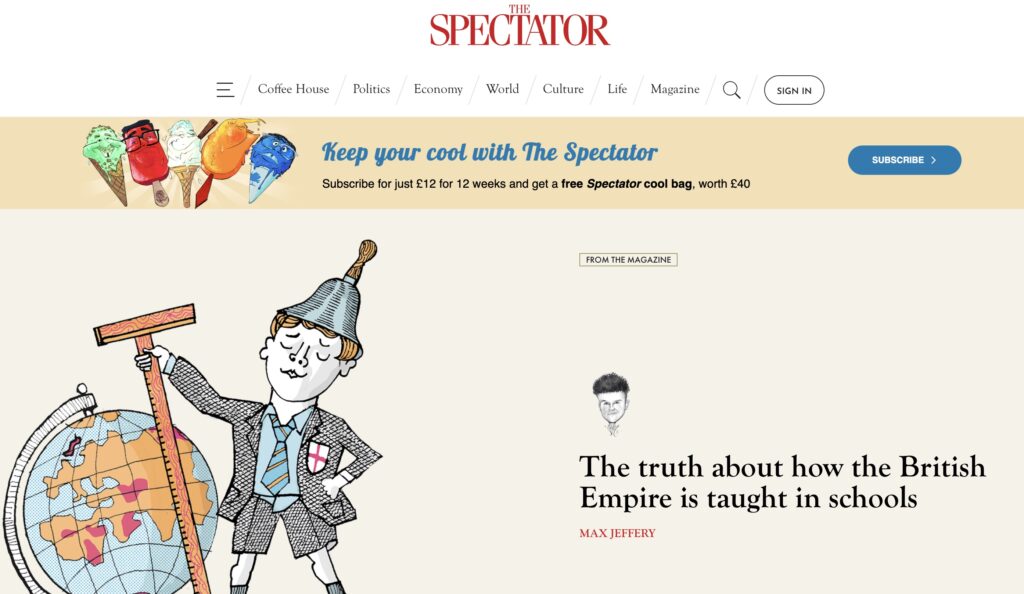
The Spectator’s owner Paul Marshall and its editor Michael Gove are afraid of William Dalrymple. His sequence of books on colonial India that have sold millions, his Empire podcast with Anita Anand that attracts a million downloads every month, and his outspoken opposition to the Israeli state’s genocidal actions have given him the clout to threaten their project to delimit and control the public’s understanding of British history and identity. In their efforts to discredit him and circumscribe what British schoolkids should learn, they have misled their readership about the teaching of the British Empire in schools, but also provided me with an opportunity to highlight an excellent research project precisely on that subject.
Marshall and Gove v Dalrymple
Paul Marshall, a hedge fund owner, has been attempting to align public opinion with his ethnocentric, Christian nationalist and “anti-woke” views since he became co-owner of GB News in 2021. He acquired The Spectator and Unherd as similarly loss-making propaganda platforms, veering towards racist Great Replacement and fossil-fuel friendly messaging.
Marshall’s concern with public political opinion aligns with fellow Christian Michael Gove’s longstanding drive to control public education.
The hedge fund manager got to know the then Shadow Secretary of State after the Labour government allowed private companies to take over struggling schools in 2002. Together with other hedge fund investors Marshall founded Absolute Return for Kids, or Ark, an educational charity that took control of its first academy in 2006 and contributed a chapter to a book that Gove launched in 2008. Once Gove was Secretary of State for Education, from 2010-14, he allocated significant funding to Ark. In 2013 Gove appointed Marshall as a lead non-executive director at the Department for Education. Marshall teamed up with other Tory donors to fund Gove’s plan to send a copy of the King James Bible to every state school.
Gove’s Conservative government gave Marshall a knighthood in 2016 for his services to education and philanthropy, and Ark now controls one of the largest chains of academies in Britain.
Marshall appointed Gove editor of The Spectator in 2024, a week after the incumbent editor Fraser Nelson had said that editors should “actively ignore” suggestions from their proprietors, adding that: “If you get sacked for it, you get sacked for it – but you hold the line. Famous last words.”
Whilst in government Gove had tried to dictate a National Curriculum for History that would focus on the deeds of the Great, White Men who, he believed, had made Britain and its Empire. As Matthew Watson wrote, “establishing who ‘we’ are simultaneously means establishing who has to be told that they are not part of ‘us’” and in Gove’s envisaged curriculum Britons of colour would be denied access to the “common thread of British citizenship”.
Professor Richard J Evans described Gove’s curriculum idea as “a pub quiz not an education”, noting that it resulted from his “decision to ignore the consultation process and do it all himself”. It was the debate over his educational vision that first demonstrated Gove’s determination to overrule those trained to know better, four years before his pro-Brexit declaration that “I think the people of this country have had enough of experts”.
Between 2011 and 2013 Gove insisted that the evidenced, research-based findings of historical and educational specialists were no more valid than his own opinions. In the end what possibly carried more weight in blocking his plans was not the objections of 96% of teachers, the Royal Historical Society, The Historical Association, History UK, The British Academy, the Institute of Race Relations and The Muslim Council of Britain, but the public intervention of Simon Schama, originally a proponent of the kind of history that Gove preferred.
Having learned of Gove’s intention to ground the national story around the deeds of imperial “heroes” like Robert Clive, Schama “baulked at the content being suggested”, describing Clive as Dalrymple had, as a “sociopathic, corrupt thug” and someone who made “our most dodgy bankers look like a combination of Mary Poppins and Jesus Christ”.
The history curriculum that survived Gove’s attempted coup was, as we will see, far less prescriptive than he had intended. But neither Gove nor his Spectator proprietor have given up. Both remain convinced that encouraging critical thought about Briain as a country where multiple colonial trajectories have converged, and where multiple ethnicities belong, is a subversive, “woke” betrayal.
As a relatively obscure academic specialist in British colonialism, my own challenges to their creed have been inconsequential, but have still prompted mendacious attacks from both The Spectator and UnHerd. Darlymple, however, is in a different league, and poses a far greater threat. He and Gove have history. In 2006, Dalrymple described Gove’s expertise-free book on Islamic terrorism, Celsius 7/7 as “a confused epic of simplistic incomprehension, riddled with more factual errors and misconceptions than any other text I have come across in two decades of reviewing books on this subject.” The Spectator’s personal attcks began in 2025 with the first of three articles. Now Gove’s “writer at large” Max Jeffrey has developed two further Spectator articles. The first, published in June was nothing more than an ad hominem hit piece accusing Darlymple of hypocrisy for writing about the plight of the dispossessed when he is from a privileged background with a comfortable life and domestic servants in India.
It is the most recent attack that interests me more though. It links Darlymple’s public interventions with misinformation about the teaching of Empire.
The Polanski Podcast
The trigger was a podcast that Darlymple recorded with Green Party leader Zach Polanski. Polanski said “When I studied history at school, it was the Tudors, it was the Romans, bit of Second World War. I don’t remember talking about empire or colonisation. Maybe schools have got better but I imagine we’re still not there.” Dalrymple, responded by noting that “it is possible to do A Level modules on the British Empire, that they are available. But they’re not core curriculum, and very few people do them, and very few teachers feel equipped to do them. It’s still a very much minority subject for most people”.
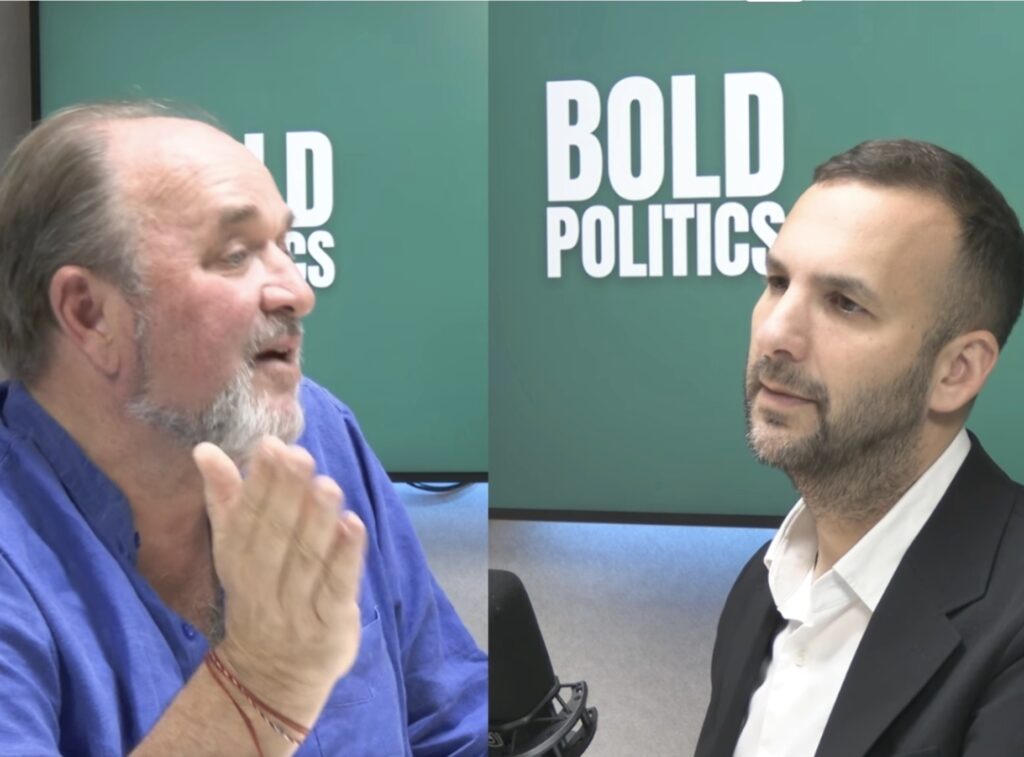
This means, Dalrymple insisted, that “most British people are entirely ignorant about what is, for better or worse, the most important thing Britain ever did.” In particular he pointed to ignorance over the British Mandate in Palestine “which at no point appears on the British curriculum”.
Gove posted about the podcast on X, declaring “It’s always fascinating to hear two privately educated chaps ruminate on their schooldays – but whatever they were taught at Ampleforth and Stockport Grammar, the history national curriculum in our state schools now deals extensively with the British Empire and indeed others”.
The first of Marshall’s publications to back up Gove’s post was UnHerd, with Samuel Rubinstein insisting that “the British Empire is taught in schools. It has been on the national curriculum for history for as long as such a thing has existed. As former education secretary Michael Gove pointed out with a hint of glee, both Polanski and Dalrymple were privately educated, and in private schools the writ of the national curriculum does not run.” Jeffrey’s latest Spectator article attacking Dalrymple was a follow-up, entitled “The Truth About How the British Empire is Taught in Schools.”
Jeffrey wrote: “William Dalrymple says that children ‘don’t learn’ about the British Empire at school … This isn’t true. I learnt about the Empire at school … It would have taken Dalrymple a few seconds to do some research and realise his error. In schools which follow the national curriculum, lessons about the British Empire are prescribed by the government. In Years 7, 8 and 9, the curriculum demands that pupils learn about Britain’s ‘ideas, political power, industry and Empire’. This has been the case for 13 years …These compulsory history lessons in Years 7, 8 and 9 are, for many, only the beginning of an exhaustive schooltime study of the British Empire’s chronology and realities. All the major exam boards – AQA, Edexcel and OCR – permit the history of the Empire to be taught at GCSE and A-level … So Dalrymple and Polanski are wrong. Of course they are. They know that. What the pair really want is kids to study history in a different, more ‘progressive’ way … He and his kind want history to be morally instructive, with the lesson always the same: Britain has done bad”.
The evidence base for these assertions is a conversation that Jeffrey had “last week” with “Mike Wells, a writer and former history teacher of 38 years who has assessed A-level history exams since 1976, and who also writes textbooks for OCR’s A-level history specification.”
Mr Wells apparently reassured Jeffrey that “many schools’ history departments have subject experts who feel best equipped to pass information about particular topics on to their pupils. Others just think that certain classes will prefer to learn about certain periods. The curriculum is fine as it is, whatever Polanski and Dalrymple might say”.
A Portrait of Teaching the British Empire
I am sure that Mr Wells was an excellent teacher and writes good textbooks on his chosen A level topics, but there is a far better evidence base, one that both UnHerd and The Spectator have overlooked, which is surprising since it comes up immediately when you do even the most cursory online search for evidence on the teaching of Empire in British schools. Someone of a mischievous disposition might even say that Jefffrey could have realised his error with just a few seconds of research.
Last year researchers from University of Oxford and UCL completed an unprecedented, large-scale national study – A portrait of the teaching of the British Empire, migration, and belonging in English secondary schools. It surveyed over 1000 teachers and 3000 school students across all regions of England and from a wide range of sociodemographic contexts, enquiring what is on the curriculum, what is in textbooks, what was being taught in the classroom and what the problems of teaching the subject are.
The findings contradict Jeffery’s breezy conclusions in almost every respect. Only 16% of teachers believe young people are taught well enough about the British Empire while almost a third of 14–18-year-olds surveyed said they knew “nothing” or “very little” about the subject.
In schools which follow the national curriculum, no lessons about the British Empire are in fact “prescribed by the government”. The only historical phenomenon prescribed is the Holocaust. Beyond that, the prescription is only that certain broad topics are covered, but these are addressed by teachers choosing among non-statutory case studies. One of these broad topics is the one that Jeffrey alludes to for Years 7, 8 and 9. Jeffrey slightly amended its title as “Britain’s ideas, political power, industry and Empire”. The actual theme is “Ideas, Political Power, Industry and Empire: Britain 1745-1901”, suggesting an emphasis on the Empire’s effects in Britain rather than Britain’s impact on the empire.
The broad topic in itself is not the basis for classroom lessons. As with the other broad topics, these are developed around non-statutory examples or case studies. “Britain’s transatlantic slave trade: its effects and its eventual abolition”, “the development of the British Empire with a depth study (for example, of India)” and “Ireland and Home Rule” are three such examples relating to Empire, but none of them have to be taught since the theme could be covered entirely by other examples, including “the Enlightenment in Europe and Britain”, “the Seven Years War and The American War of Independence”, “the French Revolutionary wars”, “Britain as the first industrial nation” or “Darwin’s ‘On The Origin of Species’”.
The teaching of empire thus remains optional, not mandatory. Although there is now more teaching about aspects of Empire than there used to be, a school could, for example, teach about the contribution of suffragettes of Indian heritage in Britain without ever explaining how the empire operated in India itself, and still meet the National Curriculum’s wording. At best, a sequence on India across six hours is likely to be all that is taught, or the same number of lessons on transatlantic slavery, typically in Year 8.
Jeffrey claims, without any evidence, that “history lessons in Years 7, 8 and 9 are, for many, only the beginning of an exhaustive schooltime study of the British Empire’s chronology and realities”. This is far from true. Only around 9.6% of GCSE history entries include a module explicitly focused on migration and/or empire. Even units on migration to Britain, introduced since the last GCSE reforms in 2015, have not been taken up with the enthusiasm many resource-providers hoped for.
The most popular of the migration units offered, the AQA unit “Migration, Empires and the People”, had 14,000 entrants in 2024 out of around 100,000 AQA GCSE history students, and it includes little about imperial conquest, racialised governance or geopolitical afterlives. Far from being “only the beginning,” Year 9 is where the overwhelming majority of teaching about Empire ends.
The assurance that Jeffrey obtained from his former teacher friend Mr Wells, that the Empire is “taught fairly objectively, as much as you can in history”, and his own conclusion, that “the curriculum is fine as it is, whatever Polanski and Dalrymple might say,” are also belied by the evidence. Although 94 per cent of teachers and 79 per cent of surveyed students thought young people should be taught about the subject, as we have seen only 16 percent of teachers believe the current provision is adequate. Some teachers report trepidation and a lack of confidence as grounds for avoiding the teaching of empire, and only 21% of those currently teaching about the British Empire recalled receiving any specialist input on it during their initial teacher education.
Mr Wells’ assertion that “Many schools’ history departments have subject experts who feel best equipped to pass information about particular topics on to their pupils” while “Others just think that certain classes will prefer to learn about certain periods” seems out of touch when all sides of educational debate since the National Curriculum was first introduced agree on one of its key principles: that students’ curricula should not depend simply on the whim or wisdom of individual teachers. If history teachers have gaps in their subject knowledge on topics considered central to school history, it is incumbent on them to plug those gaps, not to design the curriculum around them.
Marshall and Gove clearly worry that a more holistic education in Empire will lead to schoolchildren becoming disillusioned with Britain. The research indicates that they should credit our diverse youth with far greater sophistication. It finds that “The significant majority of students are willing – and often actively enthusiastic – to engage in even the most potentially difficult conversations about empire and identity in considered and reflective ways. Crucially, students themselves often articulated nuanced, critical perspectives when discussing national identity or patriotism”.
In one focus group, for example, “a Year 13 student questioned the ‘definition of patriotism,’ arguing, ‘You can be patriotic without loving the empire because it’s just a love for your country rather than a love for the history of it.’” Others “highlighted the evolving nature of Britishness as a concept that ‘has changed over time’ and emphasised the need ‘to know the mistakes’ in order to ‘enhance … true understanding’ of any celebrated past.”
While two thirds of surveyed teachers believed it important to consider students’ potential sense of pride or shame in British history when teaching about its empire, this appeared to be of far less significance to the majority of students; “only a third believed that knowing the histories of Britain’s Empire influenced their own sense of national identity in any way at all”.
Conclusion
Unlike Unherd or The Spectator, Dalrymple did bother to consult the Oxford-UCL report. Its findings inform a riposte to The Spectator’s attack in the Middle Eastern Eye. Rather than wishing to teach only the “bad” about empire or to encourage “self-flagellation” (Rubinstein’s allegation in UnHerd), it focuses on my Sussex colleague Gurminder Bhambra’s quite reasonable observation that “The failure to teach this history properly is what enables some to deny the citizenship claims of those that they deem other and, perhaps more perniciously, denies the very basis on which they make such claims.”
As the report’s authors themselves conclude: “Teaching about the British Empire, migration, and belonging is not a niche concern but a core educational responsibility—vital to preparing young people for life in a diverse, democratic society. This report demonstrates that while there is strong commitment and promising practice, significant structural, curricular, and professional barriers remain. Addressing these challenges requires joined-up action across the education system, underpinned by robust evidence, clear principles, and sustained investment”.
As Marshall, Gove and the Spectator continue to wage their culture war for control of the public’s historical imagination, those among us who value hard-won expertise will be grateful that there is now a national evidence base to support more coherent, inclusive, and rigorous approaches to teaching the British Empire.

Ashok Narayan
The history of the past is painful in parts and the papering over of all that happened doesn’t help. If victors are licensed to rewrite the story, we will continue to witness the horrors of world wars. The matchstick that is meant to shed light, shouldn’t be used to set fire to humanity.